23 April 2026 – The Matupi Council convened its first township-wide conference, bringing together local leaders, resistance representatives, and civil society actors to strengthen governance efforts in southern Chin State.
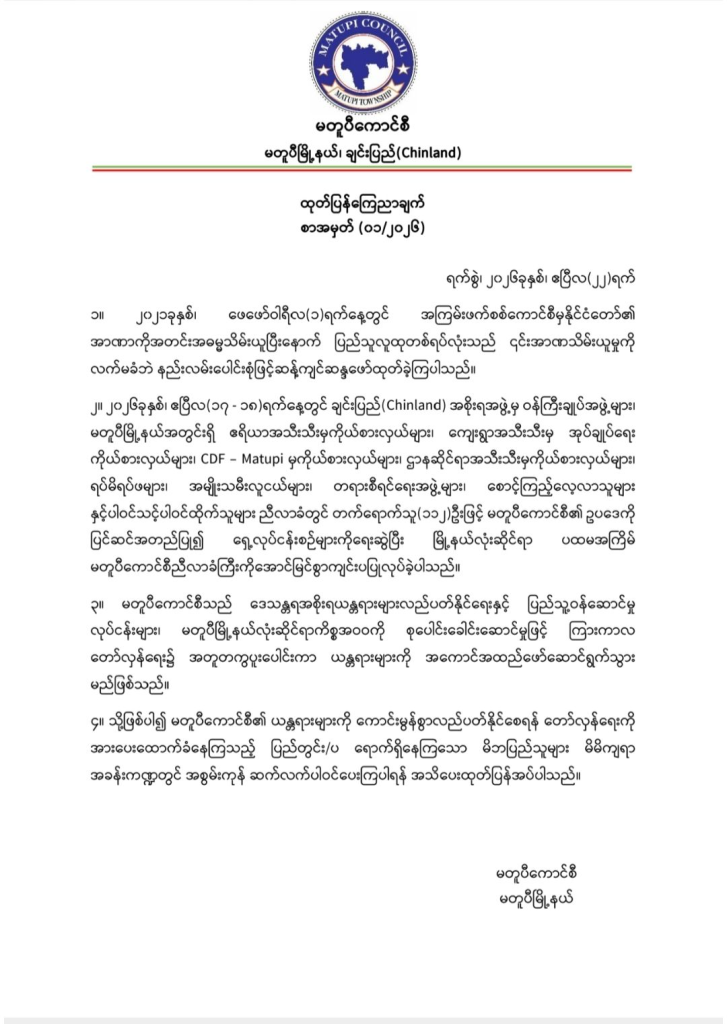
According to a statement released on 22 April, the two-day meeting was held from 17 to 18 April and attended by 112 participants. These included members of the Chinland Government, township and village administrators, representatives of the CDF-Matupi, departmental officials, judicial figures, as well as women, youth, and community leaders.
Participants reviewed and approved amendments to the Matupi Council’s legal framework and adopted key priorities for future implementation. Discussions focused on improving administrative systems, enhancing coordination among local bodies, and addressing urgent needs in public service delivery.
The council said it aims to strengthen governance structures and expand access to essential services across the township, including healthcare, education, and humanitarian support. These efforts will be carried out under a collective leadership model during the current interim period.
The conference comes at a time when local governance bodies in Chin State are playing an increasingly important role amid ongoing conflict following Myanmar’s 2021 military coup. With state institutions largely absent or weakened in many areas, township-level councils have emerged as key providers of basic administration and services.
Recent developments reported by Chin-based media highlight a growing emphasis on formalizing governance systems, including drafting local laws, coordinating with armed groups, and improving accountability. In Matupi, where infrastructure remains limited and security conditions fragile, such initiatives are seen as critical to stabilizing communities and supporting displaced populations.
The Matupi Council also called on communities both inside Myanmar and in the diaspora to continue supporting its efforts, underscoring the importance of sustained public engagement in building effective and inclusive local governance during the transitional period. – Reporting by Ben