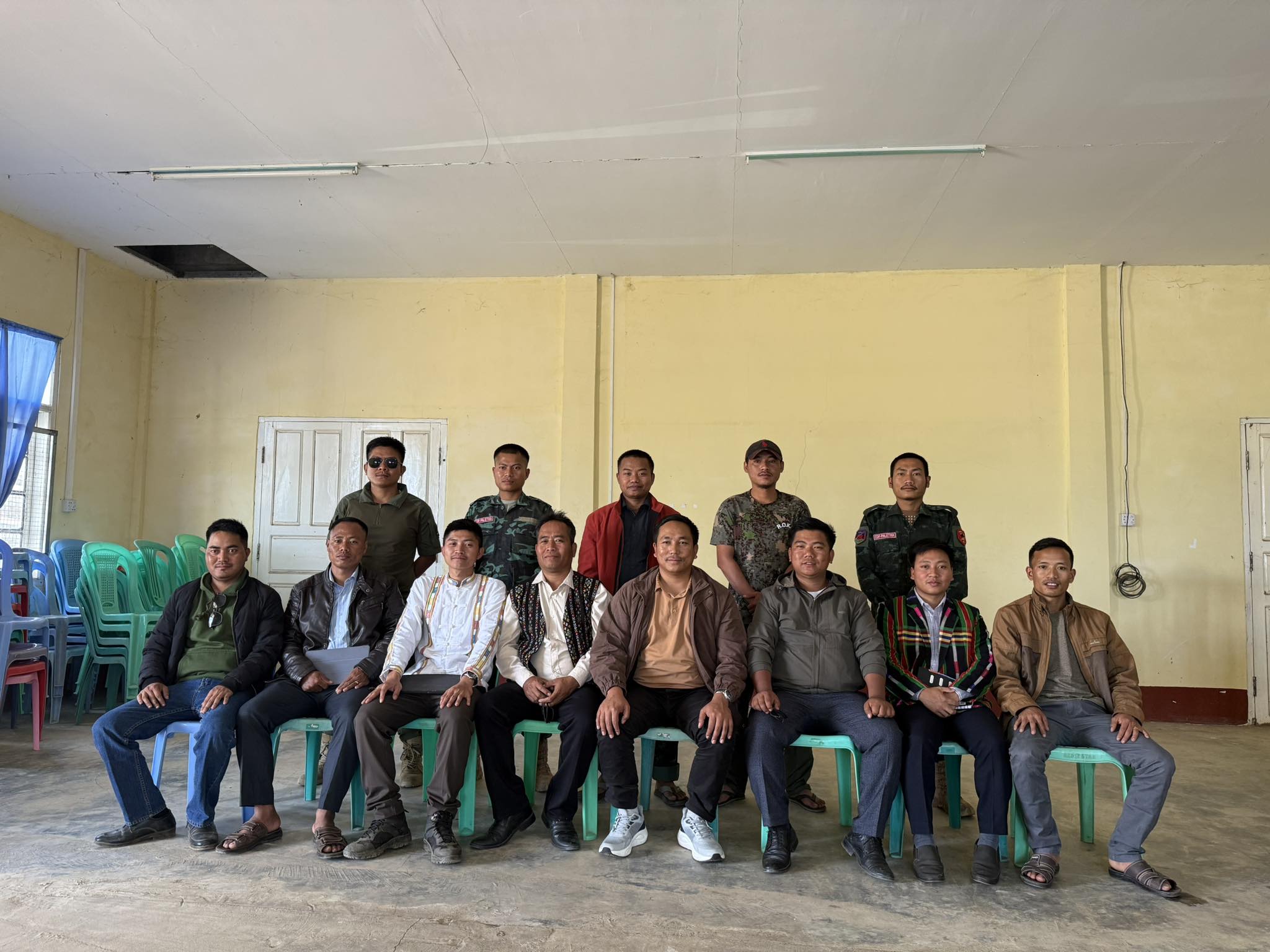
22 April 2026 – Leaders of the Chin People Union/Chin People Army (CPU/CPA) and the Interim Khumi Chin Affairs Coordination Council/Paletwa Council (IKACC/PC) held their first formal meeting in Matupi town, Chin State, marking a step toward closer coordination among Chin resistance groups.
The meeting, which took place on 25 March but was disclosed on 22 April, was attended by CPU/CPA Chairperson Salai Htang Chawn Phe and members of the IKACC/PC alliance relations team.
According to participants, discussions were described as positive and constructive, focusing on practical cooperation during the ongoing anti-military resistance. Key topics included coordination in adjoining territorial areas and the management of shared supply and transport routes—critical issues in conflict-affected regions with limited infrastructure.
An IKACC/PC official said the talks helped build mutual understanding and strengthen working relations between the two sides.
The official added that while IKACC/PC is part of the broader Chinland Council framework, it continues to maintain ties with multiple Chin armed groups, including CPU/CPA, as well as neighbouring resistance organisations.
The meeting comes amid ongoing efforts to improve coordination among Chin forces, which have at times operated under different command structures and political alignments since Myanmar’s 2021 military coup.
Analysts and local observers note that fragmented command and overlapping territories have posed challenges to unified resistance efforts, particularly in southern Chin State and Paletwa areas.
Recent developments reported by Chin-focused media highlight increasing dialogue among Chin groups aimed at reducing friction, improving logistics, and strengthening collective resistance against military rule.
However, achieving a unified command or political front remains a complex process due to differing priorities, local dynamics, and ethnic sub-group interests.
The IKACC/PC official expressed hope that continued engagement could eventually lead to a broader alliance among Chin revolutionary groups, underscoring the importance of unity as the conflict in western Myanmar continues. – Reporting by Ben