The Legacies of Ne Win: Our Common Enemy

14 August 2011: The Union of Burma suffers one of the world’s longest-running civil wars and conflicts in modern history. On August 8, 2011, we once again commemorate the 23rd anniversary of the 1988 people’s uprising in Burma, breaking down the chain of the 27-year reign of General Ne Win, the first dictator in our nation’s history. General Ne Win died, but his notorious legacy lives on. As we ponder our forward strategy against the military rule of totalitarianism, let me step back for a moment to reflect on the vestiges of Ne Win’s notorious legacy leading the Union of Burma into a full-blown theatre of civil war and conflict, as we witness today.
United We Stand, Divided We Fall

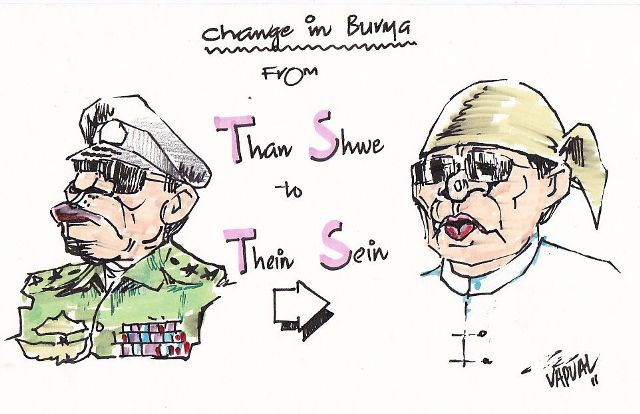
2 August 2011: (Commentary) The military regime likes to trumpet its hollow rhetoric about democratizing the Union of Burma through its cautiously premeditated seven-step road-map to a disciplined democracy. However, the regime’s ongoing full-scale military onslaught against ethnic armed opposition groups such as the Kachin Independence Organization (KIO) and Shan State Army (SSA) indicates that the new Burmese military government has no intention of ending the long-standing political stalemate. The Union Solidarity and Development Party (USDP), is in fact led by a general-turned-President Thein Sein, who has no intention of pursuing any peaceful political dialogue.

Thinking about My Identity: Reflections of a Young Chin Woman

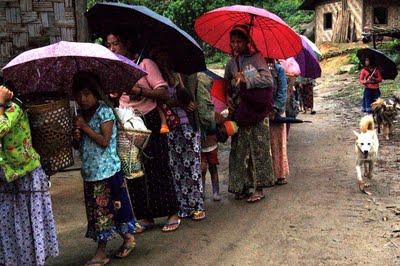
08 July 2011: Firstly, I would like to admit that I don’t know much about Chin State although I am Chin. Raised in Rangoon (Yangon), the former capital city of Burma (Myanmar), I rather find myself as an urban Chin. To tell the truth, I don’t know the square meter of Chin state and its population, let alone its history. What I know is just the fact that I am Chin, which I am proud of.

Why Civil War Will Continue in Burma (Editorial)

27 June 2010: The recent breakdown of a 17 year-old ceasefire between the Burma Army and the Kachin Independence (KIO) has once again reignited renewed interests in the country’s fragile state of political stability. The Burma Army’s advances on the Kachin strongholds earlier this month was met by fierce resistance from the Kachin Independence Army (KIA) – the military wing of the KIO, which has for months readied for the imminent offensive.

Changing the Status Quo in Burma

13 April 2011: With the formal dissolution of the State Peace and Development Council on 30th March, the Burmese junta has now ‘handed over’ the executive, legislative and judicial powers to the new government. A 69-member cabinet, headed by the president and two vice-presidents, was subsequently sworn in at the Union Parliament. This new ruling body came out of a fundamentally flawed and widely discredited electoral process, whose primary purpose was to ensure dominant positions for key junta figures in the new governing structure.

Threats to Survival: Rationalizing Persecutions in Burma

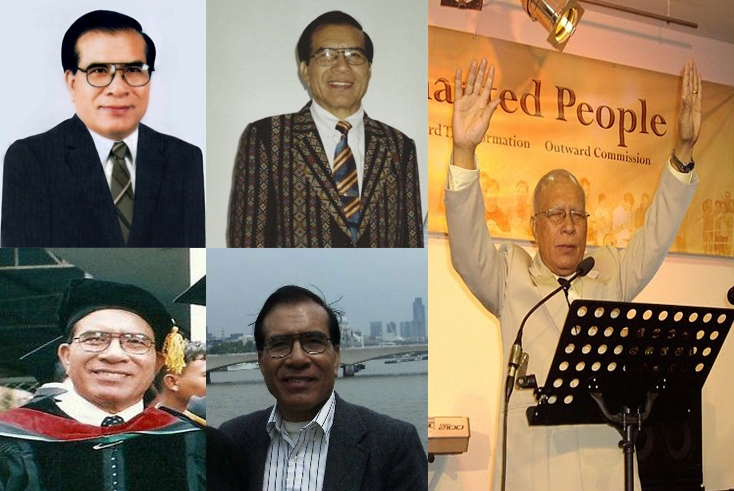
09 March 2011: [CG Note: The former President of Myanmar Baptist Convention, the largest Christian organization in Burma, wrote this article in 2009. The former political prisoner and Princeton-educated Chin pastor, Rev. Dr. Sang Awr is considered one of the most respected leaders and voices for Christians in Burma.

Burma at crossroads

04 March 2011 [CG Note: Burma’s political dynamics are changing along with the political playing field. But the military is still firmly in control, and perhaps even more so than before, as the notion of military supremacy is now formally and constitutionally entrenched. Ironically, the Burmese military regime is pursuing two opposite paths towards building a “modern and developed nation,”: democratization and militarization. But there is still room for “talks” before the current uncertainty reaches a new deadlock, argues Dr. Lian Sakhong.]