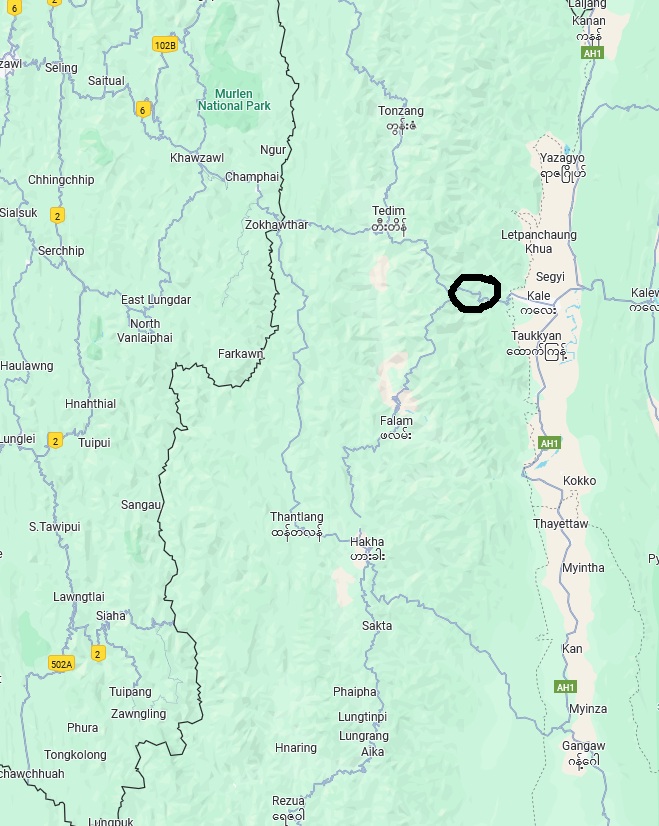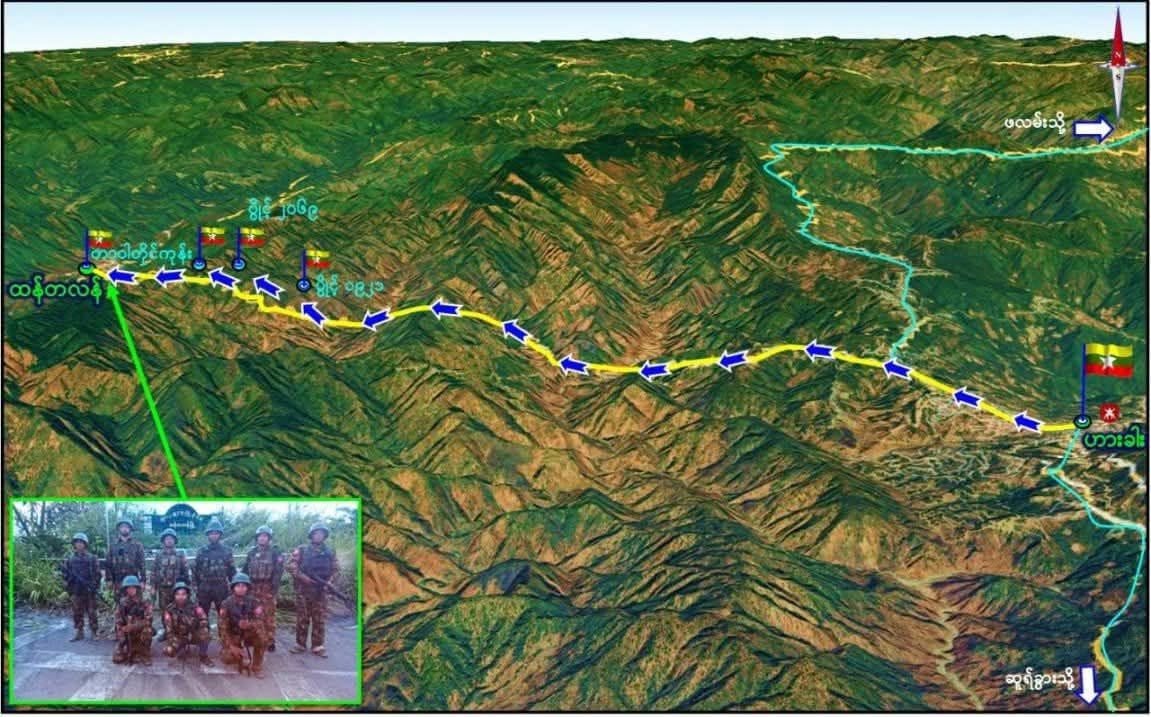
11 June 2026 – The State Security and Peace Commission (SSPC) military announced today that it has regained full control of the strategic Hakha-Thantlang road corridor in Chin State, following a week-long offensive against allied Chin resistance forces.
According to the SSPC military statements released today, operations to secure the route commenced on 4 June. The SSPC reports that its forces captured several key strategic positions, including Point 1921, Point 2069, and the Tower Hill outpost, between 6 June and 8 June. The military claims the entire road corridor was secured by June 9.
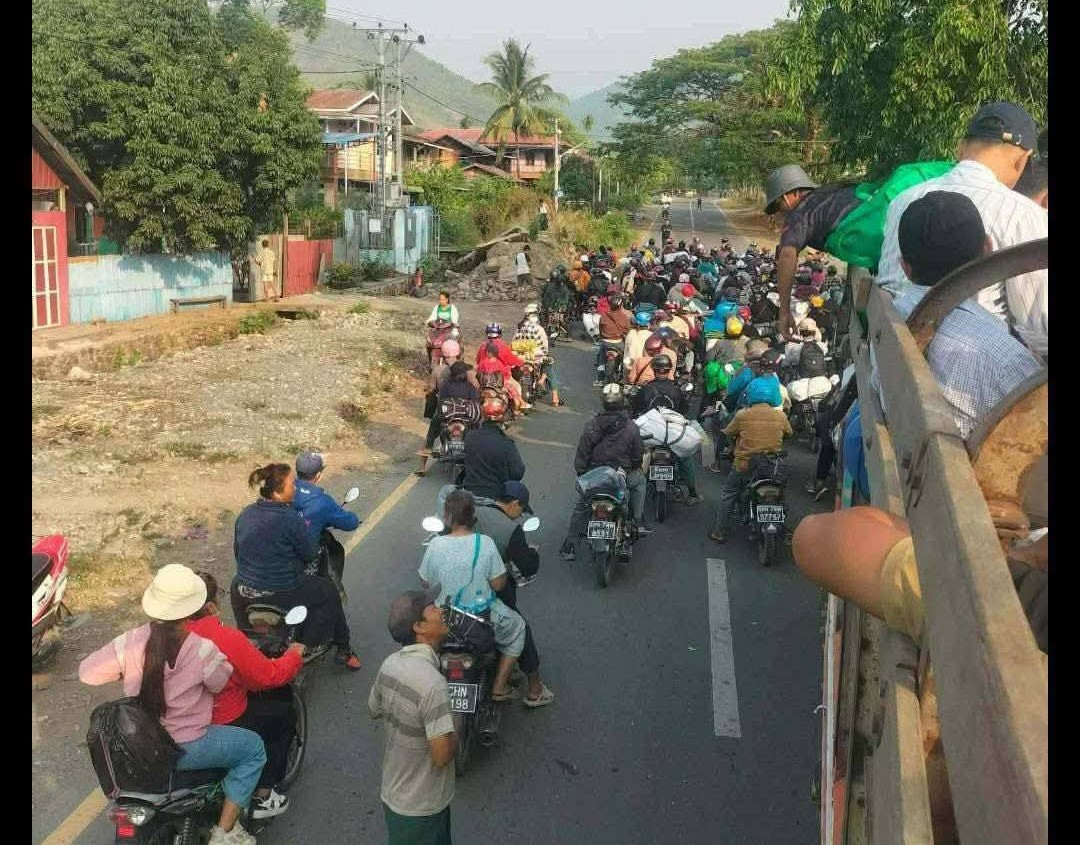
In an effort to stabilize the area, the SSPC indicated that it has initiated mine-clearance operations and is preparing plans to assist displaced residents in returning to their homes. The military also stated intentions to support the rebuilding of damaged infrastructure and the restoration of healthcare and education services, with the stated goal of reopening the route for civilian movement and trade.
Despite the military’s announcement, the status of the ground situation remains contested. Salai Htet Ni, a spokesperson for Chin National Front/Chin National Army (CNF/CNA), stated that there is currently no detailed information available to independently verify the military’s claims regarding the situation on the ground.
Context and conflict background
The Hakha-Thantlang route has been a focal point of conflict for over three years. It had been under the control of the CNF/CNA and their allied resistance forces since February 2023. While the SSPC managed to retake Thantlang town during a major offensive in October 2023, the control of the connecting road corridor has remained a critical tactical objective for both sides.
This development occurs amidst an intensified military campaign by the junta across Chin State. Recent reports from regional outlets indicate that the SSPC is pushing to regain control of major towns in southern parts of Chin State—including Kanpetlet, Mindat, and Matupi—by deploying troops from the Magway region.
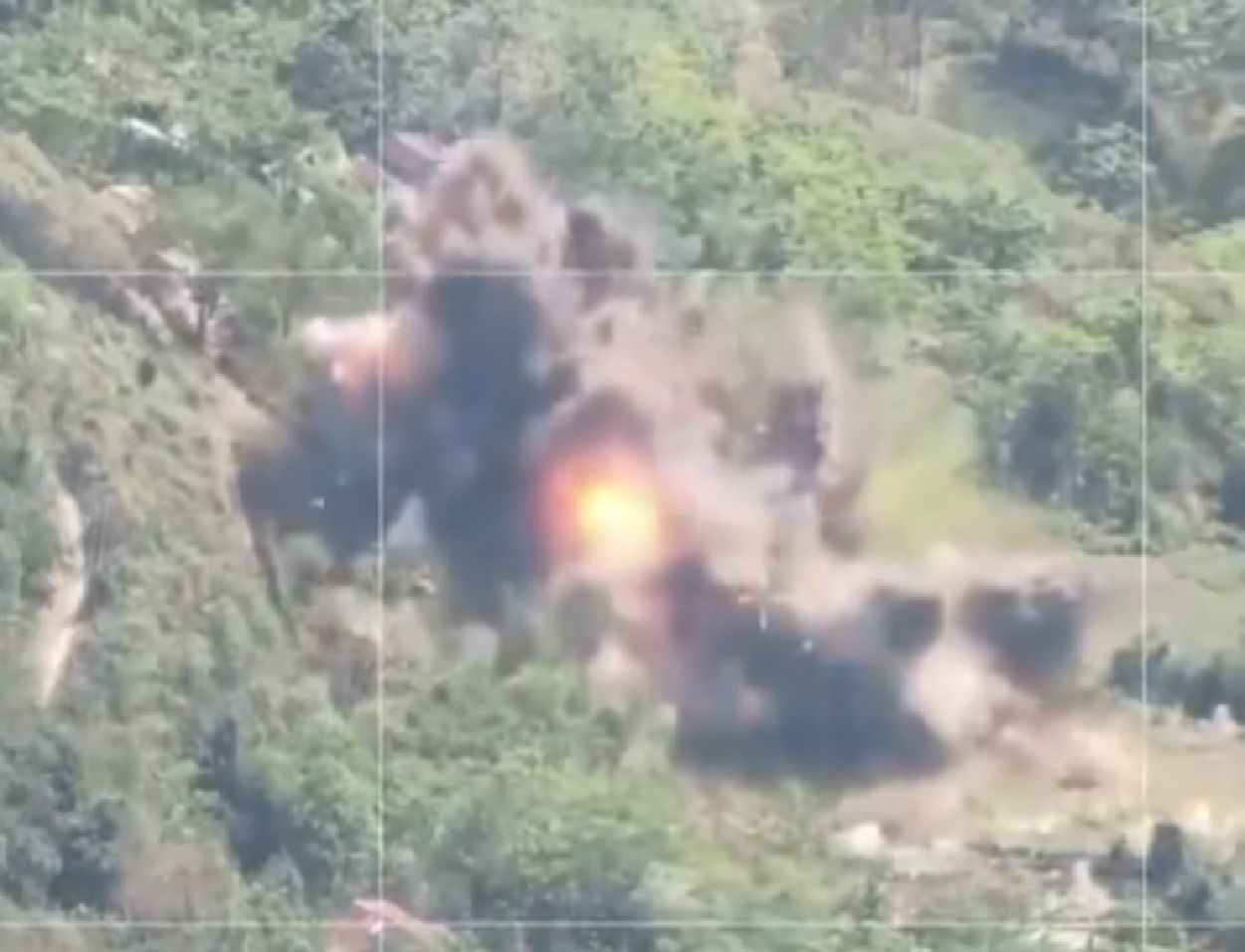
Military analysts note that the SSPC is increasingly reliant on concentrated air and artillery power as it attempts to break the deadlock in these areas, exacerbating the humanitarian crisis and forcing further displacement of civilian populations.
The situation remains volatile, as both the SSPC and the Chin resistance groups continue to vie for control over key supply lines and territory, with the local civilian population facing the brunt of the ongoing escalations.#