25 March 2026 — Fuel stations in Kalay township have imposed strict limits on motorbike petrol sales, capping purchases at 10,000 kyats per transaction amid skyrocketing prices that have exceeded 8,000 kyats per litre in some reports.
Long queues have formed at stations, while cars are reportedly allowed larger amounts.
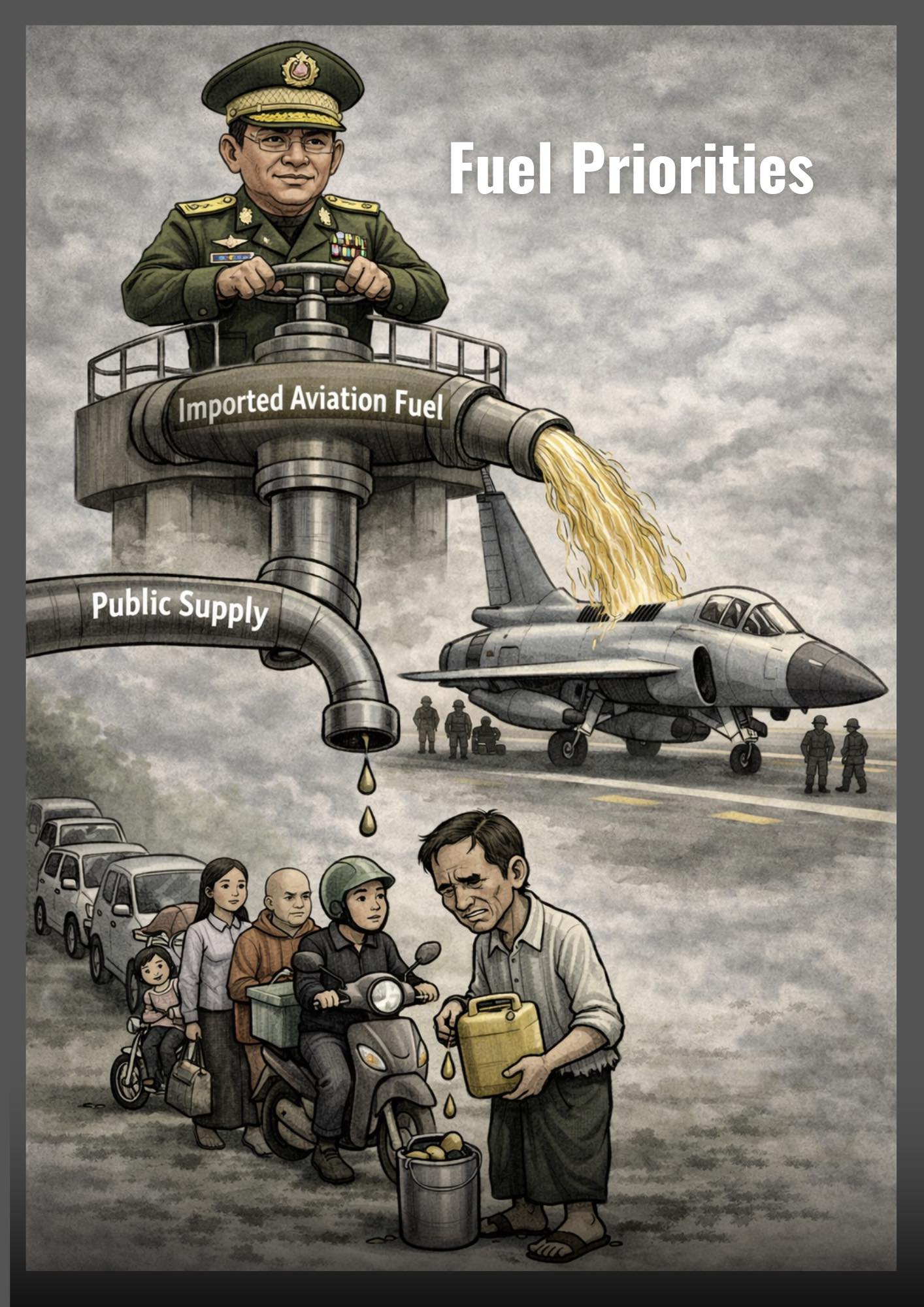
The restrictions come as the State Security and Peace Commission (SSPC) junta enforces broader fuel conservation measures, including odd-even license plate rules for vehicle movement and daily purchase limits introduced earlier in March 2026.
SSPC military junta claim the steps are necessary to secure imports and prevent shortages, but residents face growing hardship.
The situation worsened after neighbouring Mizoram State in India imposed restrictions on 25 March 2026, banning unauthorised fuel exports to Myanmar. District administrations in Siaha and Lunglei issued emergency orders, citing risks of domestic shortages linked to global price volatility from conflicts in the Middle East (West Asia). The orders limit bulk sales to unlicensed buyers and aim to curb hoarding and illegal cross-border trade.
Local reports indicate even higher prices in border areas, with around 7,000 kyats per litre last week in Hnaring town (Thantlang township, Chin State) and up to 50,000 kyats per gallon in Kalay, compared to roughly 24,000 kyats earlier. In some locations, purchases are restricted to as little as 2 litres per visit.
To further conserve fuel, Kalay civil servants have been instructed to work from home on Wednesdays, with non-essential vehicle use discouraged.
Background context
Myanmar is experiencing a nationwide fuel crisis exacerbated by the ongoing war in the Middle East, which has disrupted global oil supplies and shipping routes.
The junta has responded with multiple rounds of rationing: an odd-even vehicle movement system (effective from early March), QR code-based purchase limits, and more recently, weekly caps on refuelling based on engine size.
In resistance-held and border regions like Kalay — a key town near Chin State and the India-Myanmar border — the impact is particularly severe. Informal fuel trade from Mizoram has historically helped ease shortages in western Myanmar, but the new Indian restrictions have tightened this lifeline.
The crisis has ripple effects across daily life and the economy, causing rising transportation costs, reduced commercial activity, and increased reliance on black-market fuel at premium prices. In junta-controlled areas, government employees face rotating work-from-home days, while broader power outages linked to diesel generator shortages compound the difficulties.
Independent verification of exact local prices remains challenging due to fluid market conditions and restricted reporting. – Reporting by Daniel