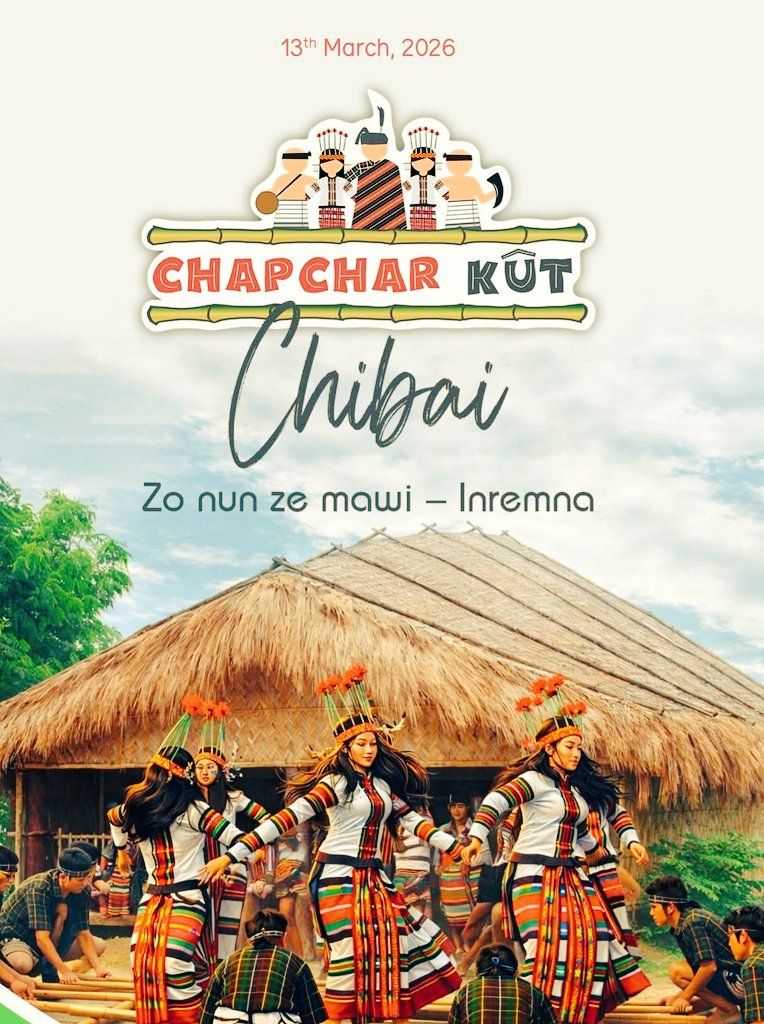
13 March 2026 – The government of Mizoram marked the state’s most popular spring festival, Chapchar Kut, with a grand celebration in Aizawl today, where Chief Minister Lalduhoma officially inaugurated the main state-level event.
The celebration was held at Lammual Ground, drawing thousands of people dressed in colorful traditional Mizo attire. The event featured cultural performances, traditional dances, music, and food stalls offering local cuisine, turning the venue into a vibrant display of Mizo culture and heritage.
Chapchar Kut is traditionally celebrated across Mizoram on the second Friday of March, although some communities extend the festivities for several days with various cultural and social activities.
The festival marks a break in the agricultural cycle of jhum cultivation, also known as slash-and-burn farming. After bamboo and trees are cut and left to dry before burning, farming activities pause, allowing communities to gather and celebrate through music, dance, and communal feasts.
Historically, Chapchar Kut dates back to around 1450–1600 AD, when the ancestors of the Mizo people lived in Lentlang. During that period, the interval between clearing forests and preparing farmland became a time for recreation, hunting, fishing, and community celebrations.
One traditional feature of the festival is the Chhawnghnawh ceremony, a communal feast that symbolically opens the celebration. Families bring baskets of food—such as rice balls, boiled eggs, and smoked meat—to share, and participants joyfully feed one another as a sign of unity and goodwill. While large open fields are less common today, the tradition continues during Chapchar Kut celebrations at festival venues and on streets.
In a message marking the occasion, Mizoram Governor Vijay Kumar Singh extended greetings to the people of the state, highlighting the festival’s spirit of unity and the enduring Mizo value of Tlawmngaihna, which emphasizes selflessness and service to others.
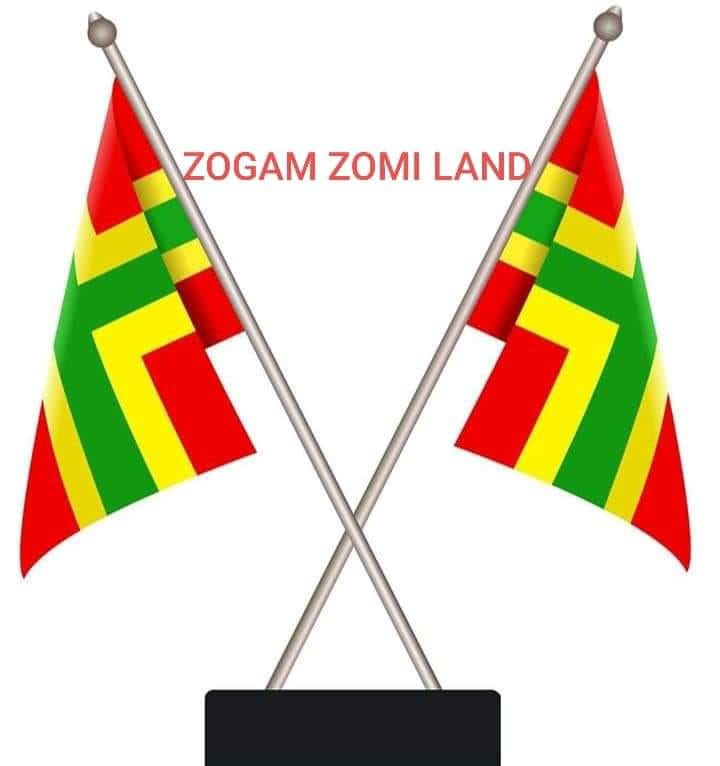
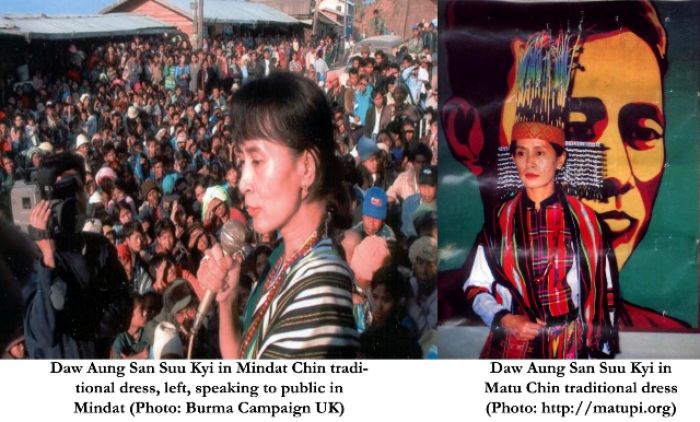
Chapchar Kut also reflects shared cultural traditions among several Zo ethnic communities across the India–Myanmar border, including people in neighboring Chin State. Many Chin communities practice similar agricultural cycles and seasonal celebrations linked to jhum cultivation, highlighting the deep historical and cultural connections among Zo-related groups in the region.
Today, Chapchar Kut continues to be widely observed across Mizoram as a major symbol of cultural identity, community harmony, and the celebration of spring. – Reporting by Ben