7 October 2025 – The UNDP found that a staggering 82% of young people in Chin State are no longer engaged in any form of education or training.
The figure places Chin State alongside Karen (Kayah: 82.9%), Tanintharyi Region (85.9%), and Sagaing Region (83.9%) as areas experiencing the most significant educational disruption.
The report entitled “A Generation On Hold: Youth Employment and Education in Myanmar”, published on 2 October, identified economic necessity, widespread insecurity, and lack of access to educational facilities as the main causes of the crisis.
It also highlighted the devastating effect of the ongoing armed conflict, a direct result of the 2021 military coup, on Myanmar’s youth.
Youths in Chin State are not engaging in education or training primarily due to safety concerns, according to the report. Other contributing factors include transportation difficulties and their responsibilities to work.
In Chin State, the 2021 military coup caused a lot of unrest and fighting. This forced many people to leave their homes, both within the state and to other places. This situation made school attendance even worse, especially where military-run schools couldn’t operate.
Salai Mang from the Chin Human Rights Organization said: “Young people and parents, especially in Chin State and beyond, are boycotting the military regime’s education system as an act of resistance, viewing participation as legitimizing the unlawful junta. This has led to many seeking foreign or informal education systems, often run by newly established public administrations in liberated areas.”
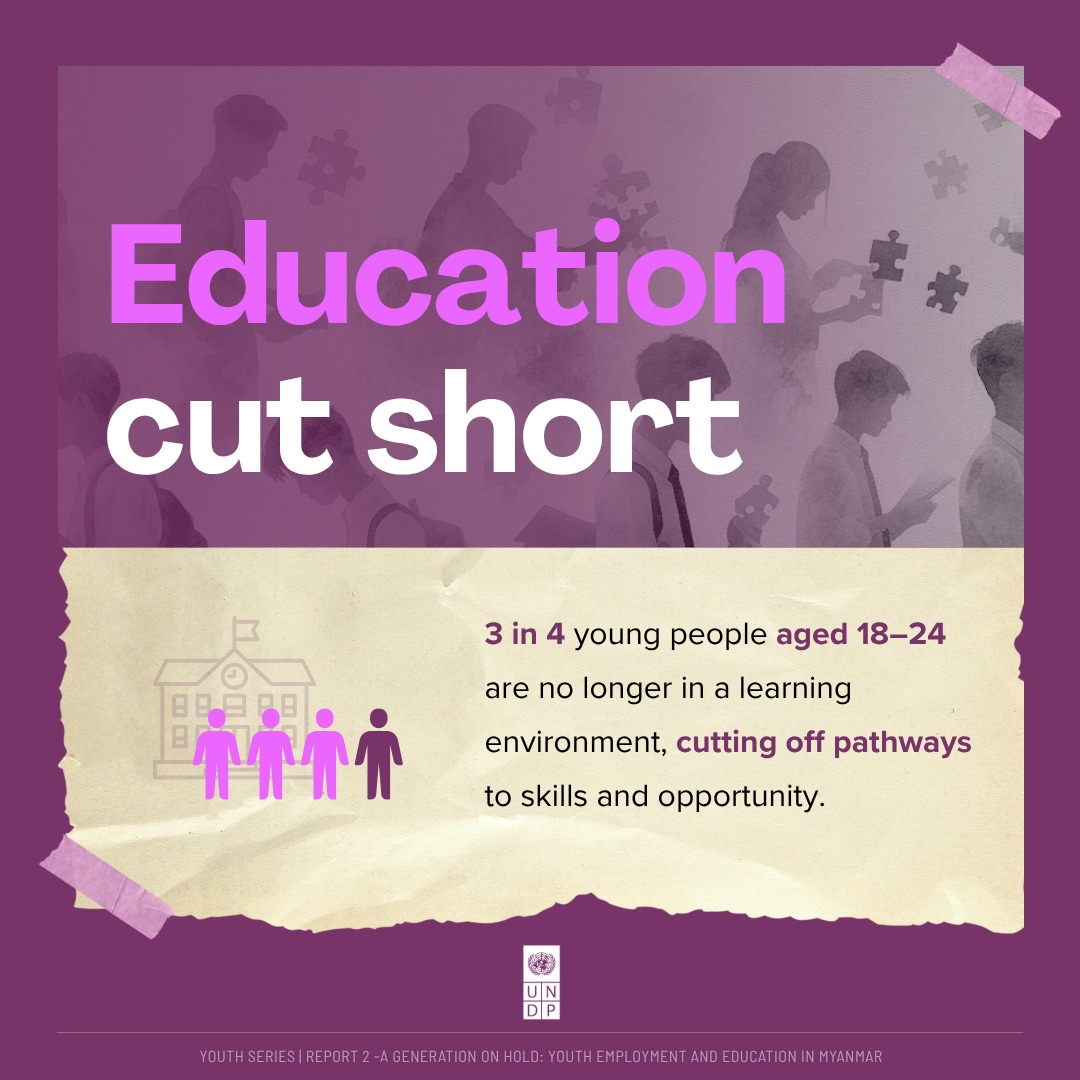
The report also indicated that three out of four young individuals aged 18 to 24 have been forced out of education or training, with a disproportionate impact on youth in rural areas who encounter heightened barriers to learning.
In addition, it also said that one in four youth — nearly 4 million — is not employed, with significantly higher exclusion among women (33.7%) and youth in conflict-affected regions like Kayah, Rakhine, Chin and Tanintharyi.
In an attempt to help fix this serious lack of education, the National Unity Government (NUG) and local communities have started their own schools, providing different places for children to learn.
“Despite infrastructure and financial challenges, these alternative systems offer more reliable, sustained, and higher-quality education with better-qualified teachers and resources. Therefore, international support and intervention should be directed towards education initiatives operated under the National Unity Government (NUG) or public administrations in these liberated areas, recognizing their crucial role in developing future generations and human capital,” added Salai Mang.
The UNDP survey also found that more young women than young men drop out of school because of chores at home. Almost one in four young women in Myanmar said this was why they left school, while only five percent of young men gave the same reason. This shows that war, money problems, and what society expects are all making it hard for young people to go to school, especially for young women in places like Chin State. – Reporting by Salai Daniel